Exactly 200 years ago, in 1823, Alexander Twilight graduated from Middlebury College in Vermont. Alexander’s father, Icabod was of mixe raced, as well as his mother Mary. Those facts would be of very little consequence for the next three years until Edward Jones, the son of a emancipated slave from South Carolina graduated from Amherst College in 1826. Amherst College decided to make note that Jones was the first African-American to graduate from an American college. However, when Middlebury College found out about this, they looked at Alexander Twilight, saw that despite him being, at best, a quarter black, he was still sufficiently African-American to be deemed the first actual African-American to have graduated college in United States history.
That was 200 years ago. For 150 years after Alexander Twilight’s mariculation, there were thousands of other African-American graduates of higher education to include the likes of Edward Mitchell, David Peck, Sam Ford McGill, Macon Allen, Ida B. Wells, Carter G. Woodson, Edward Bouchet, Booker T. Washington, W.E.B. DuBois, Patrick Healey, George Carver, James Weldon Johnson, and Thoroughgood Marshall. Among these are the first African-Americans to graduate medical school, or to pass the bar, Ivy League Graduates and even University Presidents. Also among these names is Kellis Earl Parker.
Born in Kinston, North Carolina, Kellis Parker was a lawyer, activist, and scholar. The son of a small business man, Kellis, like many Black kids growing up in the 50’s and 60’s, developed an early interest in music, with him and his brothers starting their own jazz band. It was this very passion that brought him to the path of activism when, as a teenager, he challenged a city ordinance that kept musical groups segregated in the town’s festivals. After high school, Kellis continued his activist streak, becoming one of the first five enrollees at the University of North Carolina at Chapel Hill in 1960. At North Carolina, he was involved in the student chapter of the NAACP, boycotted business in Durham that refused to intergrate, became a delegate to the United Nations International Students Conference and was elected to represent UNC at the National Student Congress in 1963.
Kellis Parker would complete his undergraduate studies at North Carolina in 1964 and continue his studies at Howard University Law School. At that time in America, there were just over 200,000 black students enrolled in the U.S. colleges and unversities. In ten years, that number had increased to over a million. From 1960 to 1975, the rate of Black enrollment in higher education increased at a rate of more than three and a half times that of total enrollment growth.
So what happened?
Did we all of sudden just get smart in 1960s? Did black people collectively have a eureka moment after the “I Have A Dream” speech? For 200 years we had a piecemeal yet relatively paltry number higher education graduates, but in the last 50 years it has been more than the prior 150 combined because, according to the United States Supreme Court, we just up and decided “maybe we should start going to college.”
The only way this is possible is because it was MADE possible.
In 1961, President John F. Kennedy signed Executive Order 10925. The order instructed federal contractors to take affirmative action to ensure applicants are treated fairly without regard to race, creed, color, or national origin. This is the beginning of Affirmative Action in America. Alone, judicial and legislative acts were not sufficient to reach the promise of equality we granted in the Declaration of Independence. Yes, Brown vs. the Board of Education desegregated schools, but it was only when these schools took action and made a plan to recruit promote their willingness to accept candidates of color did it make a difference.
It was the only way. The reality is Black men and women, like ALL men and women, have always been fully capable of everything our white counterparts are, but for our entire history, those capabilities have been staunchly denied. But we persisted, and Affirmative Action programs were there to make sure of it. We simply would not have intergrated and achieved if the opportunity was not there. And the opportunity was ONLY given when Affirmative Action plans were developed and implemented. And, as designed, they worked! The poverty rate for Black families was nearly 35% in 1967. In 2000, it dropped to under 20%. The median income for black families went from $11,000 in 1955 to nearly $24,000 in 1975, which was a higher increase than the rate of all families. Outside of numeric and economic improvements, Affirmative Action’s main goal was to intergrate and diversify a racially homogeneous America and it was doing exactly that. Putting Black and Brown faces where we have historically been denied and the consequence of that has force those who never knew or accepted our agency and ability to see we are fully capable of the exact same achievements as they are. That is the only way to show equality, through action.
But we have seen this story before. The same forces that fought against equality and diversity have been fighting that fight and winning it for years. And those fights have born fruit. Several schools have previously banned Affirmative Action programs over the last 30 years and the results are clear. Studies have shown the number of Black and Brown students enrolled at flagship state universities did not match the share of high school graduates in those same demographics and it did nothing but widen the gap over time. Ironically, a Harvard study found that states that have either banned or overturned Affirmative Action laws have shown a significant decrease in Asian female, Black female, and Latino male representation compared to states that had no such prohibitions. In short, Affirmative Action worked, as designed and without it, it the ill-effects of systemic racism and bias WILL increase. This is not even debatable.
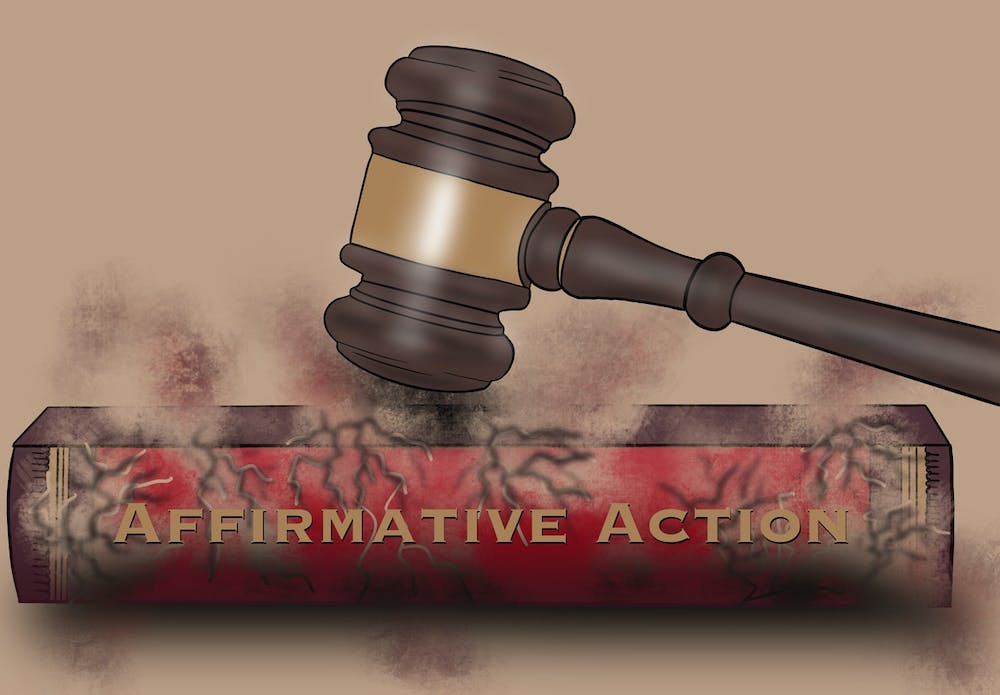
Kellis Parker might have been one of the first Black men to attend the University of North Carolina. The irony that it is his very univerity that is at the center of the United States Supreme Court’s decision to overturn the very action that allowed for him and millions more to achieve what we has historically been denied is not lost. This is a bad decision by a historically bad Court. This is just the latest decision in a bank of decisions that have crippled a nation that does not match their judicial ideology. We are NOT the minority here. They are. But we have been here before. Only difference is that now we have clearly shown what we are capable of when given the opportunity. Affirmative Action is and was that opportunity. Let’s just hope it doesn’t take another 200 years to get back.
 Your Friendly Neighborhood Black Man