It’s a funny story whenever someone wonders what I do for a living. It’s a valid question to ask. There are those who assume all I do is political work, given my proximity to campaigns and candidates for a lot of years. But that part of my life is done. Whenever I do tell people what I do or more specifically where I work, it’s more often than not met with a lot of confusion. You see, I work for Elevance Health. It’s one of the largest employers in the area. It also happens to be one of the largest health insurance companies in the nation, with a product that has universal name ID. But again, if I tell you I work for Elevance Health, you probably have no idea what that is. However, when I explain the company’s former name, Anthem, it clicks with familiarity. Yes, the reasons aren’t even clear to me, but I often have to explain it with comparisons to Facebook. How Facebook changed it’s name to “Meta” but the product is still Facebook, same thing with Anthem. It changed it’s name to Elevance Health, but we still carry the same Anthem Blue Cross Blue Shield plans most people know and have.
Oddly enough, the more I think about it, healthcare has basically become as much of a family business as political involvment. My father, a career Navy guy, retired and became a service office for Veterans Affairs. He made it his life’s work to make sure those who served this country receive the care and provision they were promised. My father has been gone for nearly 10 years and to this day, I still receive regards from those he assisted when they needed it. My brother, made it his life’s passion from the start of his career. He started out as an community organizer working to bring things like accessible healthcare to the truly disadvantage. That lead him to elected office where he could fight for affordable healthcare options for an entire state. Which lead to one of his greatest career achievements, as one of the more pivotal voices in the implementation of the Affordable Care Act or Obamacare, which changed the face of healthcare across the entire nation. However, my brother couldn’t stop there. When he left the Obama Administration, he got a job as the Chief Diversity Officer at a state hospital. Yes, my brother was a healthcare executive. I am damn proud of him. I am thankful for my father. And I absolutely value the work I do on a daily basis and the people I know I’ve helped.
I explain this as the country has been inudated by the news of the shooting death of the UnitedHealthcare CEO Brian Thompson in New York City. To say the reaction of someone being shot to death has been heart-felt or sypathetic would be seriously comical at this point. UnitedHealthcare is part of the larger UnitedHealth Group, the largest healthcare conglomerate in the nation and one of the largest companies in the world. It doesn’t simply provide(or deny) healthcare to millions of people. UnitedHealth, like Elevance and other healthcare conglomerates grew to their existing size by diversifying their growth to include any and everything that involves healthcare. Not just health insurance, but doctor offices, pharmacies, managed care providers, billing and even information and technology. What this practically means that someone can be insured by the same entity, have care provided by that entity, prescriptions given by the same entity and ultimately pay that very entity. To be honest, this is a by-product of a serious issue in the healthcare industry that failed consumers on a yearly basis of having constant issues between doctors vs pharmacies, pharmacies vs billing, billing vs doctors and doctor vs technology. Each struggle to betray the needs of those who paid for care, which was unfit to give them the help they pay for. So when these large corporate insurance businesses buy doctors offices, pharmacies, and billing, the idea is to have everything integrated to better help consumers. But it also has the added bonus of massively increasing profits to a rather ridiculous level.
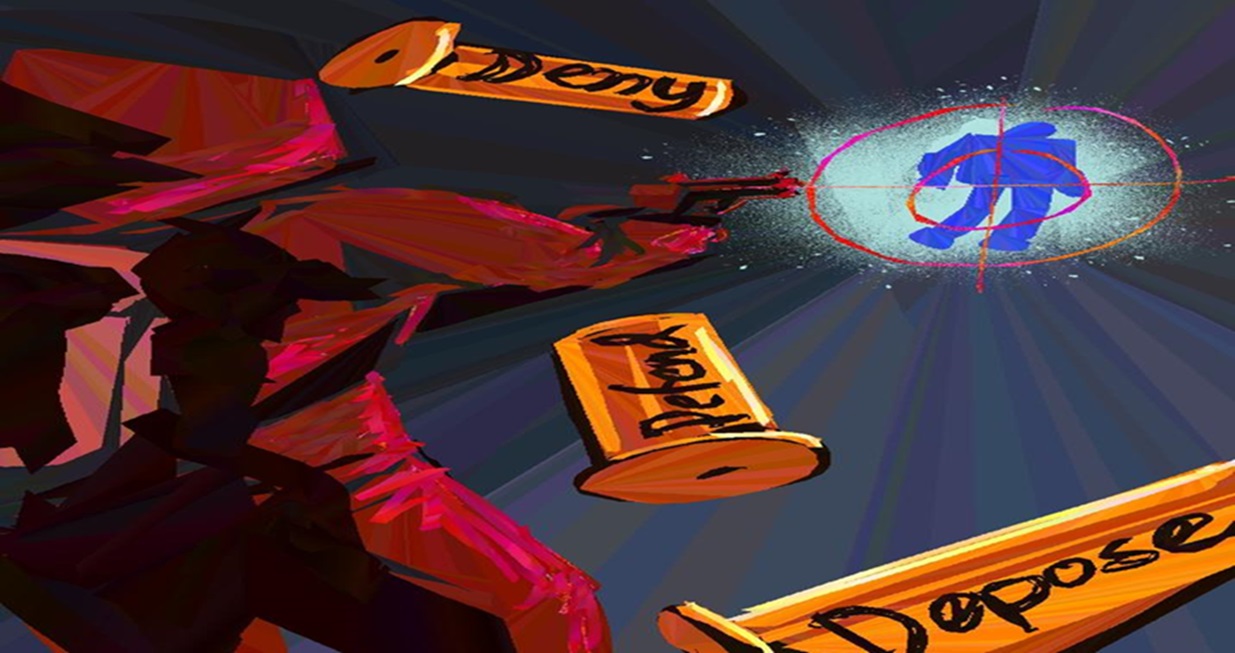
Now hold on to yourselves, because there’s another side to the story, the “Dark Side”(of course I had to get in a Star Wars reference). The Dark Side of the health insurance industry isn’t just how much of a profit it has received, but precisely how it goes about making those profits. The integration of services that private insurance companies do wasn’t done out of a desire to help consumers. It was done expressly as a money-making enterprise. The actual by-product was an integrated process for consumers. You see, when initiatives like the Affordable Care Act, designed to help consumers, made healthcare more affordable, it prevented health insurance companies from being able to make money. So to subsudies their revenue, they had to find ways to make up the loss by hedging their profits, which they did. On top of this is the constant aggrivation of consumers nationwide signaled by the “Delay, Deny and Defend” mantra of insurance companies, going absolutely out their way to refuse to pay insurance claims of consumers who need care. What ostensibly is antihetical to the whole idea of “healthcare” is a lifeline to healthcare companies. If you ask for care, you will submit a claim. That claim goes to the insurer and the insurer pays, allowing for you to receive the care. However, if they refuse to pay the claim or stall payment, you do not receive that care. And while, you can continue to ask for the care and appeal their denial and if you persist, they will pay the claim, but the reality is the thousands of those who submit a claim will not appeal their denial, which means they do not receive the care they need. So if you you do not submit the claim, they do not pay the claim, they can save money by not paying the claim. So, by practice, an insurance company will deny a claim, not because they do not want to pay it, but there’s a financial motive to not pay. In short, it is good business for the healthcare industry to be in the business of not providing healthcare. Of course this motive could irrevocably alter your financial, emotional and physical well-being, but this is the result. Yes, it is VERY perverse and grossly immoral, but morality is not a metric of a capitalistic society.
The bigger question becomes about the CEO of UnitedHealthcare and whether his part in all of this either justifies shooting him to death or excuses the reaction expressed from it.
I know you’ve heard a lot about what happened. The jokes could almost write themselves. But that’s the issue. This assassination has caused many across social media and the news to highlight the complications of the insurance industry. And the culprit of their complications is found to be Unitedhealthcare’s CEO. Now, is Brian Thompson personally responsible for denying every single claim submitted? No. Frankly, claim denial is not even main driver for UnitedHealth Group’s profits. They own doctor offices. They make millions from the pharmaceuticals. The government pays them in their managed care programs. Denying claims, while it does make money, it cannot possibly grow business. On top of that, Brian Thompson was the CEO of UnitedHealthcare. That’s not even the parent company. It’s a subsidary of UnitedHealth Group. And of course, let’s state the obvious. Brian Thompson is but a single cog in an infernal machine. He just works there. Killing him doesn’t just mean insurance companies will not stop denying claims, but it also means that someone below him is about to be really stinking happy with the pay raise and benefits they are about to inherent. Congratulations. You just made some rich guy much richer. So then, what was accomplished by his killing? There was news that Elevance Health has annouced that it plans to drop anesthesia coverage cap it intially introduced last month, but knowing my employer as I know my employer, this was not a decision made in a matter of days. These are the type of decisions that are made in meetings about the meeting to have a meeting about meeting up to decide to have a meeting. And nobody brought any firearms to any of those Microsoft Teams calls.
What we are left with, without a shadow of any doubt, is a man was shot to death on a city street. I am repeating this for a reason. Because some of you need to hear it again. A man was shot to death by a firearm. This is a conversation that we are decidedly NOT having. And as a country, we’ve avoided having this conversation for so long that there are new conversations we need to have. The alledged gunman, Luigi Mangione was arrested with a 3D printed “ghost gun”, a gun made from scratch that has no serial number, no original owner and no real manufacturer. The problem becomes when we are able to start this conversation about gun violence, we are only able to do so because we can identify the problem. When someone buys a firearm, that firearm has a serial number that can be tracked and you can find who the buyer is and ultimately the person who is in possession of a firearm if used in a crime. This has helped with crime prevention. Take New York City for instance, the very streets where this crime was committed. The homicide rate for the city hovers just under 5 per 100,000. This is a far cry from what it was at over 30 years ago when crime was rampant. In 1990 nearly 2,300 people were killed in New York. Last year that number was less than 400. They were only able to do this by having a conversation about gun violence and doing something about it. However the Justice Department and ATF has only been able to trace less than one percent of ghost guns to their purchaser. This is an issue for a nation that has gone from just over 4 homicides per 100,000 ten years ago to nearly 7 per 100,000 now.
And then there are the salient political factors that beg to be addressed. Yes, the affordablity and accessibility of healthcare is critically important and demands political redress. What I’m not going to ignore is what gun violences does to this country on a daily basis and it does NOT matter who the victim is. Nevermind the fact that he had a family. Nevermind the fact that insurance companies have been predatory for years now. It doesn’t make it any better because he was a one percenter or because the healthcare industry is evil. He didn’t make it evil. And it definitely ain’t getting any better without him. We can have a conversation about healthcare accessibility. But it cannot trump the conversation we need to have about gun violence. Fact of the matter is more people are killed with a firearm than being denied healthcare from an insurance company. Not even to mention the thousands of people that stress a broken system even more when they are shot, thoroughly damaged and need help from a damanged system. You want to change the healthcare system fix the gun laws! There’s a good start right there.
I’ll end with something fun. Comic books. If you’re reading this, you probably know a little bit of a lot about me. You know I’m a bit of a geek and frankly I’m proud of it. Yeah, my geekery of choice is Star Wars, but I’ll dive into comic books as well. Two of my favorite characters are from each of the main publishers, the Punisher from Marvel Comics and the Question from DC Comics. Calling these guys “superheroes” or even “heroes” for that matter would be a stretch. They do not act like your traditional heroes. The Question fights crime but isn’t highly regarded by other in the comic book world. He’s a pretentious asshole that think he’s smarter than everyone(it’s a wonder why I like him). He walks to a beat of his own drum and applies his own morality to how he fights crime. Not very undifferent from my other favorite character, the Punisher. You know him. The guy with the white skull over his chest that shoots to death all of his villains. So of course all armed tough guys in real life admire this guy. What these people fail to realize is the Punisher, and a slight lesser extent the Question, are an extension of a writer’s interpretation of what they saw in society. These characters were created in the 1960s and 1970s, a time where American society was visibly falling apart. They are apparitions of a broken society. They are not to be worship or respected. They are a symptom. Vigilantism is not a good thing. It’s a rejection of the social contract that we agreed upon as a society. We depend on that contract because it is for the entire society with the involvement of the entire society. Not some dude with a beef. Because we’d look really silly if we started depending on the moral decision-making of country-club prep school kid with a man-crush on the Unabomber. That would probably be a little embarrassing.
If Brian Thompson had done wrong, then he should be exposed to the justice system we all are. If we find our legal wrong does not match our definition of a moral wrong, then we address this with legislative and political systems we have at our disposal. We don’t just decide a legal wrong justifies stopping a moral wrong. That’s no better than Scott Roeder who killed George Tiller. Or Timothy McVeigh. And yes, it’s no better than Osama Bin Laden. He also thought his moral righteousness outweighed my brother’s legal right to exist. There is nothing funny about this. There is no rationalizing what is irrational. There are moral absolutes in our society. This is mine.
And for you people that are actually taking glee and share flippant comments and memes about someone being shot to death on a city street… I’ll take the break from you that you should have taken from the internet. You’re better than this. We are better than this.
 Your Friendly Neighborhood Black Man